Reviewing 3D Render Welcome August for Real Embroidery Projects
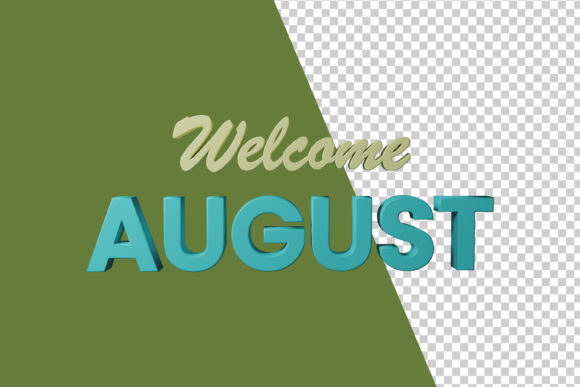
As a designer who spends more time staring at stitch simulations than most people care to admit, I approach new design assets with a mix of curiosity and skepticism. When I first encountered the 3D Render Welcome August file, my initial reaction was visual delight. The description promises a "3d Summer render" with colorful isometric shapes, and visually, it delivers a vibrant, modern aesthetic that screams late-summer warmth. However, my job isn't just to look at pretty pictures; it's to determine if a digital embroidery file can survive the transition from a high-resolution PSD on a screen to a tangible handmade product on a customer's chest or tote bag.
The Visual Mood and Design Personality
The first thing that strikes me about 3D Render Welcome August is its playful yet structured personality. The isometric style suggests depth and dimension, which is trendy in current graphic design. For an embroidery project, this presents both an opportunity and a challenge. The "colourful" nature mentioned in the product details implies a need for careful thread selection. In a real-world scenario, I imagine this design working beautifully as a focal point on a neutral background, where the bright hues can pop without clashing.
The layout feels balanced, likely intended for center-chest placement on apparel or a central motif on home decor. The ability to edit the letters in the provided PSD file is a significant plus for customization, allowing us to tailor the message for specific clients before converting it into a stitch file. This flexibility makes it a strong candidate for personalized gift lines or boutique branding where uniqueness is key.
Real-World Application: The Summer Tote Scenario
To truly evaluate this design, I mentally placed it onto a canvas tote bag design project. Imagine a local farmer's market vendor needing fresh merchandise for the end of summer. 3D Render Welcome August would be perfect here. The geometric shapes translate well to fill stitch and satin stitch combinations, providing the necessary coverage to mimic that 3D rendered look.
If I were stitching this for a client, I would lean towards a sturdy cotton or canvas fabric. The structure of the material supports the density required for the colorful shapes. On a flimsy t-shirt, the weight of the stitching might cause puckering, especially with an isometric design that relies on sharp angles. For a sweatshirt embroidery project, the thicker fabric would handle the design well, making it an excellent choice for transitional weather apparel as we move from summer into early autumn.
Considerations for Fabric and Texture
While the visual appeal is high, practical execution requires attention to fabric texture. Isometric designs often have long straight lines and sharp corners. On stretchy fabrics like jersey knits, these areas are prone to distortion if not properly stabilized. I would strongly advise using a cut-away stabilizer rather than tear-away for this specific design to ensure the geometric integrity remains intact after washing.
Furthermore, the "3D" effect in the original render relies on shading and gradients. In embroidery, we simulate this through thread colors and stitch direction. If you are adapting this Summer themed graphic, you must ensure you have enough distinct thread shades to create the illusion of depth. Using too few colors might flatten the design, losing the very characteristic that makes 3D Render Welcome August stand out.
Commercial Viability for Etsy Sellers and Makers
For Etsy sellers and craft business owners, the value of a design lies in its versatility and the perceived quality of the finished product. This design has high "giftability." It fits perfectly into categories like holiday embroidery for back-to-school gifts or end-of-summer celebrations. The clean lines and modern vibe appeal to a younger demographic, potentially increasing buyer engagement on social media platforms where visual presentation is everything.
However, commercial use requires due diligence. The product description mentions receiving PSD and PNG files with smart layers. It is crucial to note that these are raster-based formats. To use this as a machine embroidery design, you will need to digitize it or use software to convert these vectors/shapes into a stitch file (like PES, DST, or XXX). Do not assume the PSD is ready to stitch directly. You must check the licensing terms regarding the conversion and resale of the resulting embroidery file. Always confirm whether the license allows for commercial embroidery on physical goods before listing items in your small shop product catalog.
Technical Challenges and Solutions
There are specific areas where 3D Render Welcome August demands caution. Small hoop sizes might be restrictive if the design includes intricate surrounding elements or if the text needs to remain legible. Tiny lettering in isometric fonts can become muddy if the stitch count is too high or the resolution too low. Before committing to a production run, test the design on scrap fabric identical to your final material.
- Check Stitch Density: Ensure the colorful shapes aren't too dense, which can cause needle breakage or fabric stiffness.
- Review Corners: Isometric shapes have sharp points; verify your machine handles these turns cleanly without bird-nesting.
- Contrast Testing: View your digitized version in black and white to ensure the shapes distinguish themselves clearly without relying solely on color.
- Curved Surfaces: If applying this to a cap, remember that the curved surface distorts vertical lines. You may need to adjust the pull compensation.
Final Verdict on Design Value
In the world of custom apparel and embroidered patch creation, consistency builds trust. 3D Render Welcome August offers a fresh, seasonal look that can elevate a brand's presentation if executed correctly. It moves beyond generic clip art, offering a stylized, professional appearance that justifies a higher price point for personalized products.
Ultimately, this design is a strong contender for makers looking to capture the late-summer mood. Whether used for a baby embroidery project on a onesie (with adjusted density) or a bold statement on a kitchen towel, its success depends on the digitizer's skill in translating those 3D renders into precise stitches. By respecting the technical limitations of embroidery machines and choosing the right materials, you can turn this vibrant 3D SVG-style concept into a best-selling item. Just remember to validate the file formats and licensing for your specific business model before cutting that first thread.