Review: Koi 3d Shadow Box Template for Embroidery
As a designer who spends more time at the hoop than away from it, I am always skeptical of files that promise "one-click" perfection. We have all been there: you buy a digital embroidery file expecting a smooth run, only to find ungrouped layers, missing elements, or stitch paths that make no sense. However, after spending some time evaluating the Koi 3d Shadow Box Template, I found myself pleasantly surprised by its potential for both personal crafting and commercial application. This isn't just another graphic; it is a structured asset designed with the specific constraints of layering and depth in mind.
First Impressions and Visual Personality
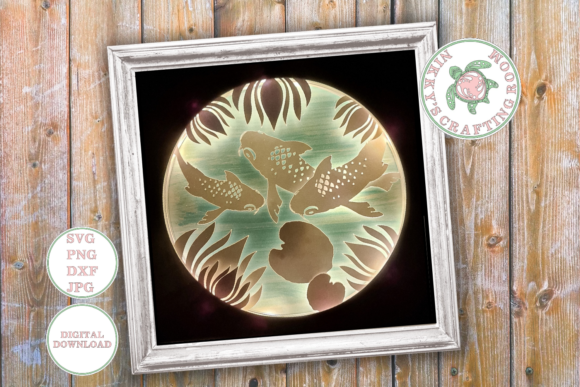
When I first unzipped the package, the organization stood out immediately. The description notes that the SVGs are done in a one click upload format with all the layers grouped together, and in practice, this saves a significant amount of prep time. For those of us running a busy craft business, time saved in the digitizing software is time earned in production. The design itself carries a serene, fluid mood. The koi fish motif is timeless, but the "shadow box" approach gives it a modern, dimensional twist that feels less like a flat sticker and more like a piece of art.
The layout suggests a strong visual personality suitable for boutique branding. It avoids the cluttered look of overly complex applique design files, opting instead for clean lines that rely on layering for impact. This makes the Koi 3d Shadow Box Template incredibly versatile. Whether you are aiming for a minimalist aesthetic or a bold statement piece, the foundational geometry holds up well. It feels like a design that respects the medium of embroidery rather than trying to force a vector illustration into a format it doesn't belong in.
Real-World Application: The Custom Tote Scenario
To truly test the viability of this file, I imagined a specific real-life scenario: creating a limited run of custom tote bags for a local yoga studio's retreat. The client wanted something that felt handmade but polished enough to sell as a small shop product. Here is where the Koi 3d Shadow Box Template shines. Because the layers are pre-grouped, setting up the cut files for the fabric layers was seamless.
In this context, the design works beautifully as a tote bag design. The koi theme aligns perfectly with themes of flow and balance, making it an ideal personalized gift or retail item. When stitched, the separation between the layers creates a genuine sense of depth. Unlike a standard fill stitch or satin stitch flat design, this template encourages the use of different fabric textures for each layer. Imagine using a matte cotton for the base, a slight sheen satin for the fish body, and a textured linen for the background elements. The result is a finished product that invites touch and inspection, increasing the perceived value for the customer.
Versatility Across Product Lines
Beyond tote bags, I can see this machine embroidery design translating well to other substrates. For sweatshirt embroidery, the layered approach adds a premium feel to what is often a casual garment. It would also make a stunning embroidered patch if hooped correctly with a merrowed edge finish. For those focusing on home decor, this could easily become a focal point on a pillow cover or a decorative wall hanging. The "shadow box" concept naturally lends itself to nursery decor or holiday embroidery projects where dimensionality is key to catching the eye.
For Etsy sellers and digital product creators, this file offers a dual opportunity. You can sell the physical handmade product, or, depending on the license terms (which you must verify), offer the assembled design as part of a larger kit. The clean lines also make it excellent for creating printable mockups to showcase your portfolio before you even stitch a single thread.
Technical Considerations and Fabric Choices
While the design is robust, it demands respect regarding material selection. A 3D layered design behaves differently than a flat one. If you attempt this on highly stretchy fabric without proper stabilization, the layers may shift or pucker, ruining the alignment that makes the shadow effect work. I strongly advise using a high-quality cut-away stabilizer for garments that will be washed frequently, such as custom apparel or baby embroidery items.
Fabric texture plays a massive role here. On a thick towel or a coarse canvas, the fine details of the koi scales or fins might get lost if the stitch density is too low. Conversely, on very thin fabric, the weight of multiple layers could cause sagging. It is crucial to test the design on scrap fabric first. Check how the thread colors interact with your chosen material. A dark thread on a light fabric provides contrast, but if you are doing a tonal look (e.g., navy on black), ensure your lighting in the final photos captures the depth, or the design will look flat.
Special care is needed for curved surfaces like caps. While possible, aligning multiple layers of a shadow box design on a curved brim requires precise hooping and potentially a stronger backing to prevent the layers from separating during wear. For commercial embroidery runs, consistency is key; ensure your tension settings are dialed in before committing to a large batch.
Enhancing Brand Value and Customer Trust
Ultimately, the choice of design assets reflects on your brand. Using a well-structured file like the Koi 3d Shadow Box Template signals professionalism. Customers can tell the difference between a rushed, poorly aligned job and a thoughtful, multi-dimensional piece. This level of detail builds customer trust and encourages repeat business. It elevates a simple holiday gift into a keepsake.
The visual appeal of this design lies in its clarity. When executed correctly, the boundaries between the layers are crisp, enhancing the stitching clarity. This professionalism translates directly to buyer engagement, whether you are posting on social media or displaying items at a craft fair. A unique, 3D element stops the scroll and draws the eye in a way that standard flat designs often fail to do.
Final Designer Notes and Best Practices
Before you commit to your next embroidery project with this file, keep these practical tips in mind. First, always review the hoop size requirements. Even though the file is scalable, ensure your machine can accommodate the full width of the shadow box layers without re-hooping, which can lead to misalignment. Second, inspect the small details. Zoom in on your software to ensure there are no stray nodes or overlapping paths that could cause thread breaks.
It is also wise to test the design in black and white mockups to check the contrast and shape recognition without the distraction of color. Does the koi still read clearly? If yes, your composition is strong. Finally, and perhaps most importantly, confirm the licensing terms. The product description mentions the file formats (SVG, PNG, DXF, JPG) and the grouping strategy, but it does not explicitly state the commercial rights for resale of the digital file versus the physical item. Always clarify this with the creator to protect your craft business.
In conclusion, the Koi 3d Shadow Box Template is a solid addition to any designer's library. It bridges the gap between traditional embroidery and modern papercraft aesthetics, offering a fresh take on a classic subject. With careful attention to fabric choice, stabilization, and layer alignment, it has the potential to become a signature piece in your collection of design assets. It is a reminder that sometimes, the best projects are the ones that allow us to play with depth, light, and texture to create something truly tangible.